



Diesel Engine Fuel Consumption Guide for Boat Owners
“How much fuel should my boat engine actually use?”

Whether you're planning a longer cruise, estimating running costs, or trying to diagnose performance issues, understanding diesel marine engine fuel consumption can make a big difference.
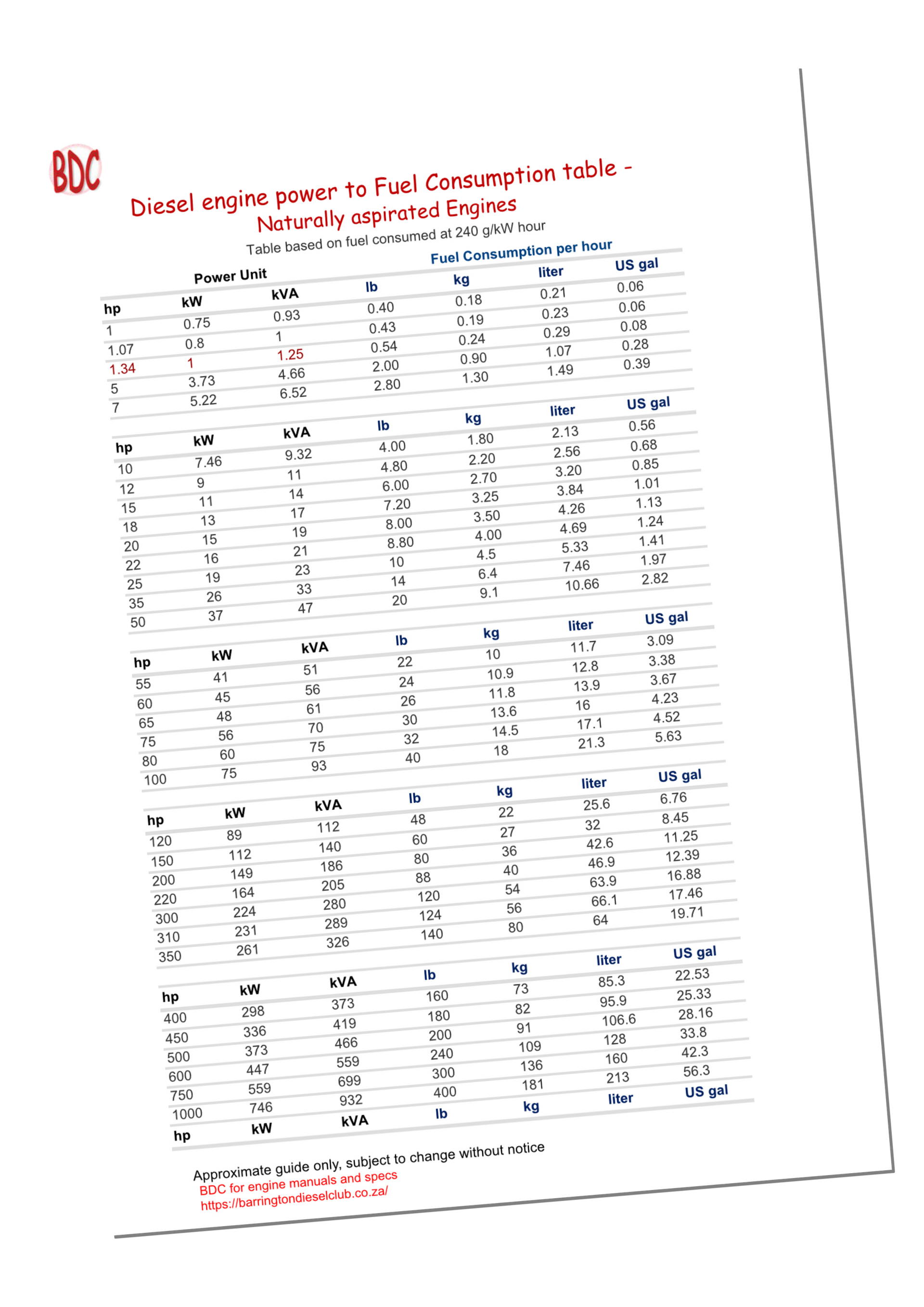
To help answer that question, Steve recently shared a diesel engine power-to-fuel consumption reference table used by engineers to estimate fuel usage across a wide range of engine sizes. The figures are based on a typical diesel engine efficiency of 240 grams of fuel per kW per hour, which is a widely accepted engineering benchmark.
This type of reference acts as a boat fuel consumption calculator in table form, allowing you to quickly estimate how much fuel your engine should burn at a given power level.
Diesel Engine Fuel Consumption by Power Output
The table links engine power (in horsepower and kilowatts) to fuel consumption per hour, measured in:
- Pounds of fuel
- Kilograms
- Litres per hour
- US gallons per hour
This allows boat owners to estimate marine diesel fuel burn per hour based on engine size.
For example:
| Engine Power | Approx Fuel Use |
|---|---|
| 50 hp diesel engine | ~10.66 litres per hour |
| 100 hp diesel engine | ~21.3 litres per hour |
| 300 hp diesel engine | ~63.9 litres per hour |
These figures assume the engine is operating near full output. In real cruising conditions, most boats operate at 60–80% load, so fuel consumption is usually lower.
Why Understanding Boat Fuel Consumption Matters
Knowing your boat fuel burn rate helps with several important aspects of boating.
Trip Planning and Range
If you know your engine’s litres per hour fuel consumption, you can estimate:
- Cruising range
- Fuel stops
- Passage planning for longer journeys
This is especially useful for canal boats, cruising yachts, and motorboats travelling longer distances.
Diagnosing Engine Performance Problems
If your marine diesel fuel consumption is significantly higher than expected, it may indicate:
- Fouled hull or propeller
- Incorrect propeller pitch
- Engine tuning issues
- Fuel injector problems
- Restricted air intake or exhaust
Fuel consumption can often act as an early indicator that something needs attention.
Managing Running Costs
Fuel is one of the largest operating costs for most vessels. Understanding your diesel engine fuel burn rate helps owners estimate operating costs more accurately.
Real-World Fuel Consumption Will Vary
While tables like this provide a useful diesel engine fuel consumption guide, actual fuel usage depends on several factors:
- Engine RPM and load
- Vessel weight and hull design
- Weather and sea conditions
- Hull cleanliness
- Propeller efficiency
- Engine maintenance condition
A well-maintained engine and drivetrain can significantly improve fuel efficiency.
Optimising Your Boat’s Fuel Efficiency
If you're unsure whether your boat is running efficiently, Steve can help diagnose and optimise performance.
With more than 30 years of marine repair experience, Steve’s Mobile Boat Service specialises in:
- Marine engine diagnostics
- Fuel system troubleshooting
- Propeller and drivetrain optimisation
- Pre-season engine servicing
- Performance and efficiency checks
Sometimes a simple adjustment can significantly reduce boat fuel consumption per hour and improve overall engine performance.
Need Advice About Your Boat Engine?
If you have questions about diesel engine fuel consumption, engine performance, or fuel efficiency, Steve’s Mobile Boat Service can help.
Professional diagnostics and preventative maintenance can save fuel, improve reliability, and extend the life of your engine.
Share this article

 by
by